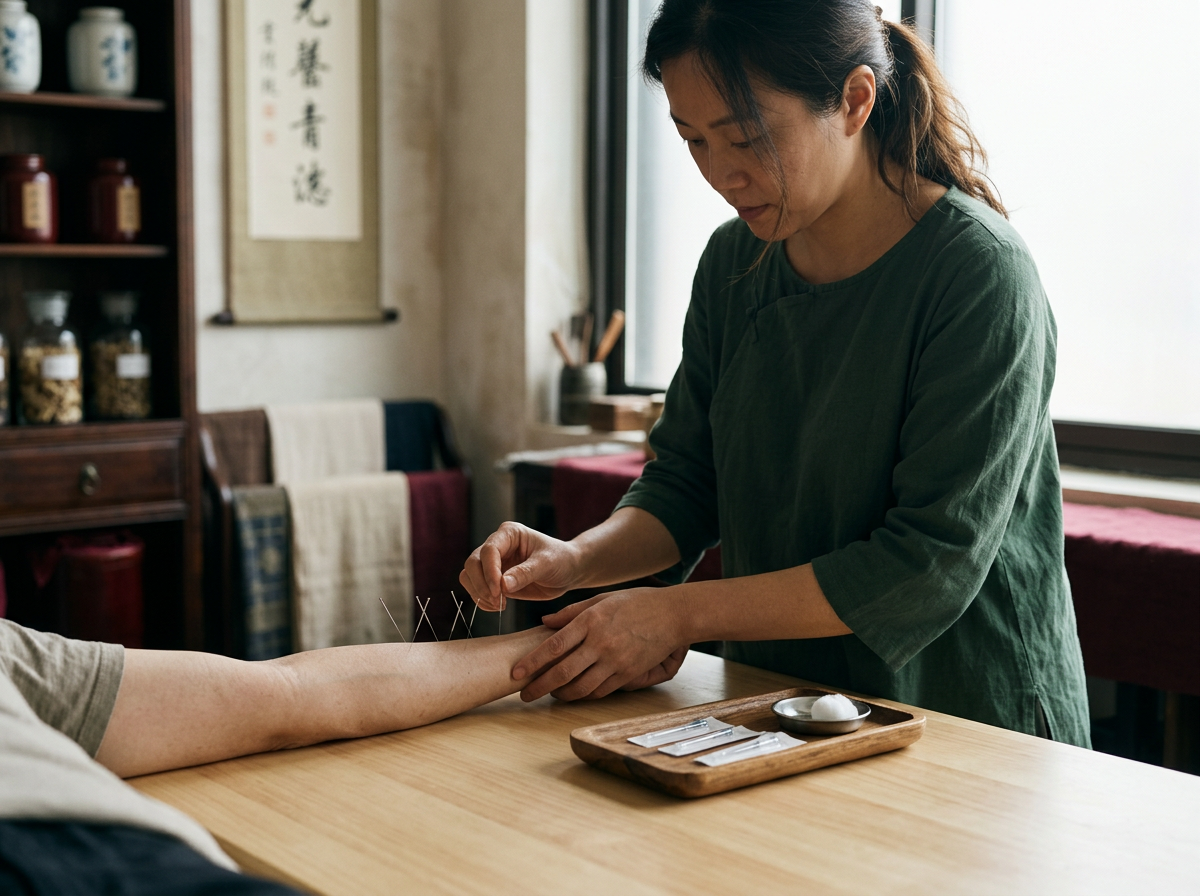
The wisdom of Chinese medicine can be traced back for thousands of years.
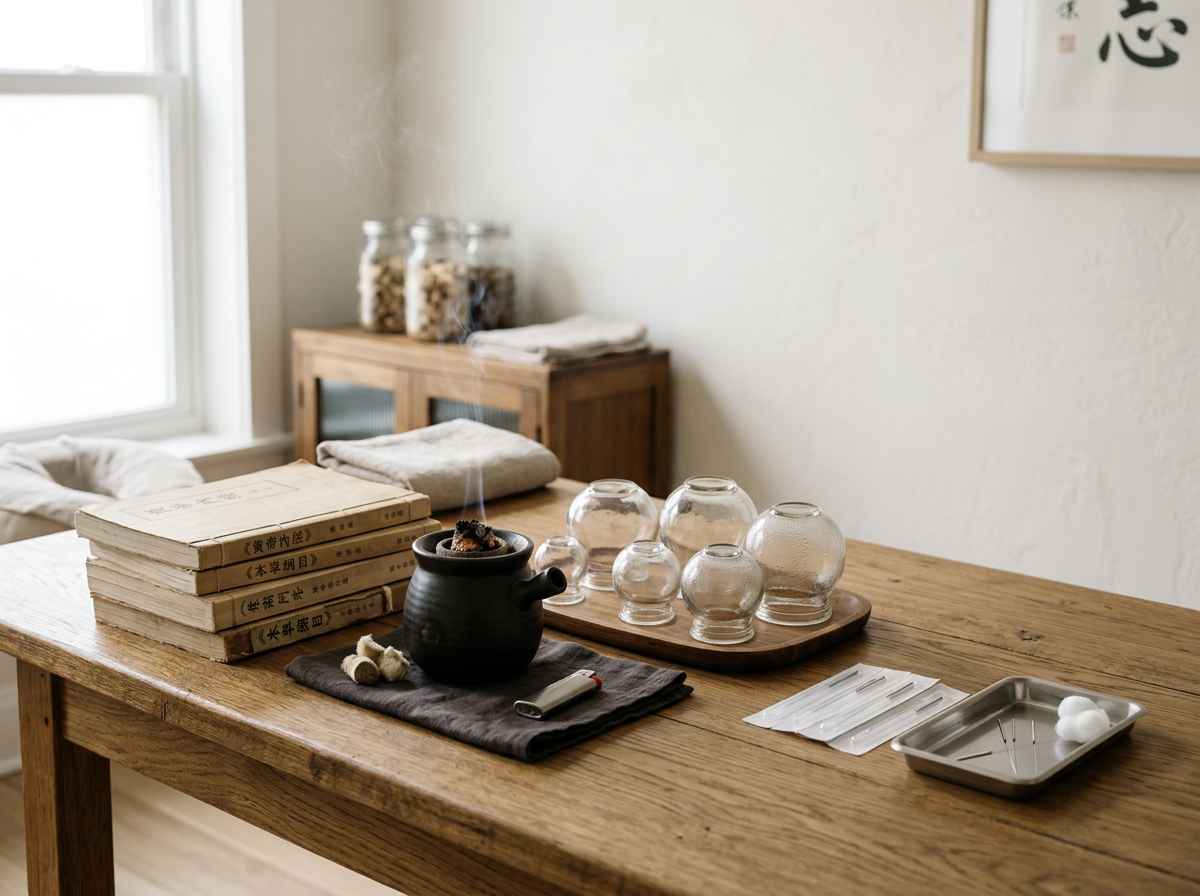
What is acupuncture?
Acupuncture is one of the oldest continuously practised forms of medicine in the world, with roots in China stretching back more than 2,000 years. It involves inserting very fine, sterile, single-use needles into specific points on the body to support the body's own capacity to rebalance and heal.
Traditional Chinese medicine looks at the whole person, not just the symptom you come in with. Your sleep, digestion, energy, stress levels, menstrual cycle and emotional wellbeing all form part of the picture. Two people with the same complaint may receive quite different treatments, because the aim is to address what sits underneath the problem as well as the problem itself.
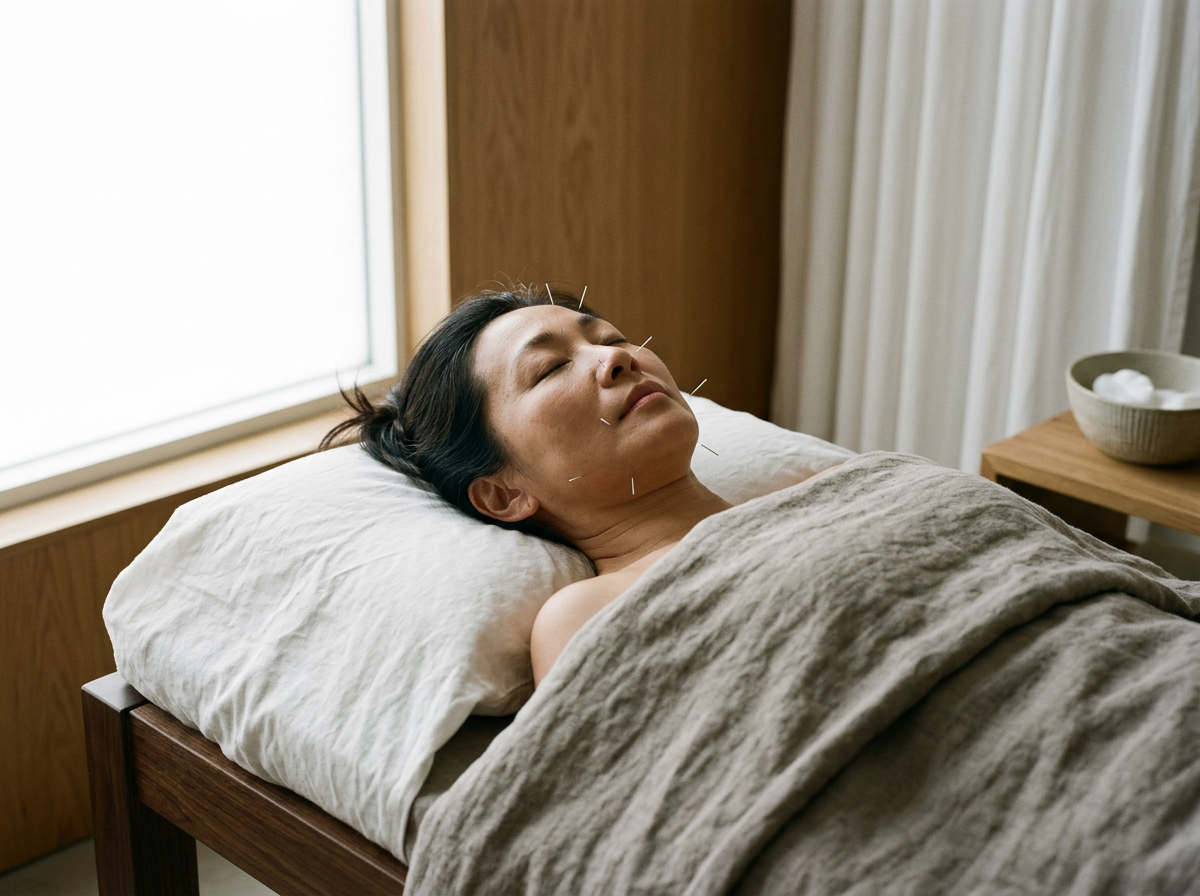
Treatment is usually far gentler than people expect. The needles are much finer than those used for injections or blood tests, and most people find sessions deeply relaxing. Some even fall asleep on the couch.
How does acupuncture work?
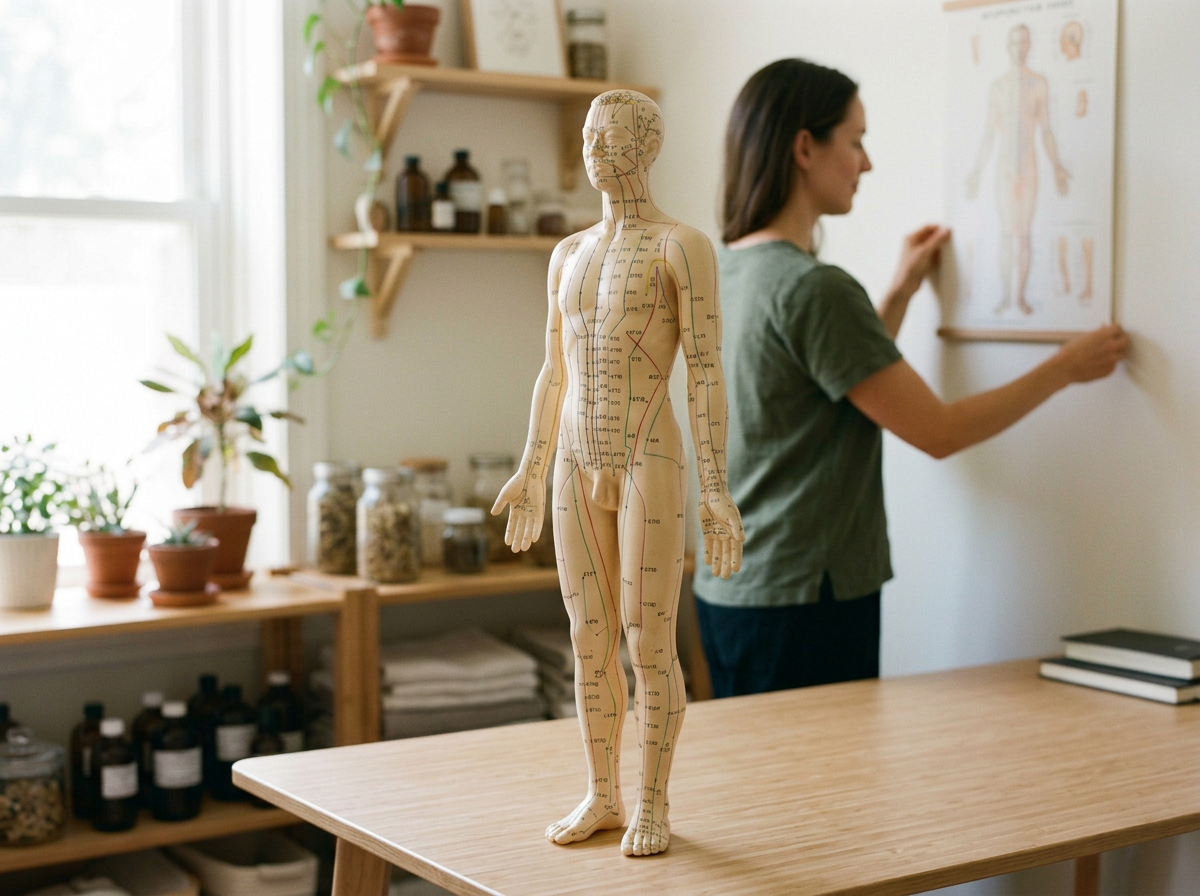
The traditional view. In Chinese medicine, health depends on the smooth flow of qi (vital energy) through channels in the body, often called meridians. When that flow is disrupted, whether by stress, injury, illness, diet or lifestyle, imbalances can show up as pain or other symptoms. Stimulating specific acupuncture points is believed to restore that flow and bring the body back into balance.
The modern view. Researchers have also studied acupuncture through a Western scientific lens. Studies suggest that needling may stimulate nerves, muscles and connective tissue, influence how the nervous system processes pain, and prompt the release of the body's natural painkilling chemicals, such as endorphins. In the UK, NICE (National Institute for Health and Care Excellence) guidance includes acupuncture as an option for chronic primary pain and for preventing tension-type headaches and migraines.
What to expect
Your first appointment begins with a detailed consultation about your health, history and lifestyle. We may also look at your tongue and take your pulse, two traditional diagnostic tools. We then put together a treatment plan tailored to you. Depending on your needs, treatment may also include cupping, gua sha, electroacupuncture, ear seeds, or dietary and lifestyle advice rooted in Chinese medicine.
As a member of the British Acupuncture Council, I follow strict codes of safe practice and professional conduct.